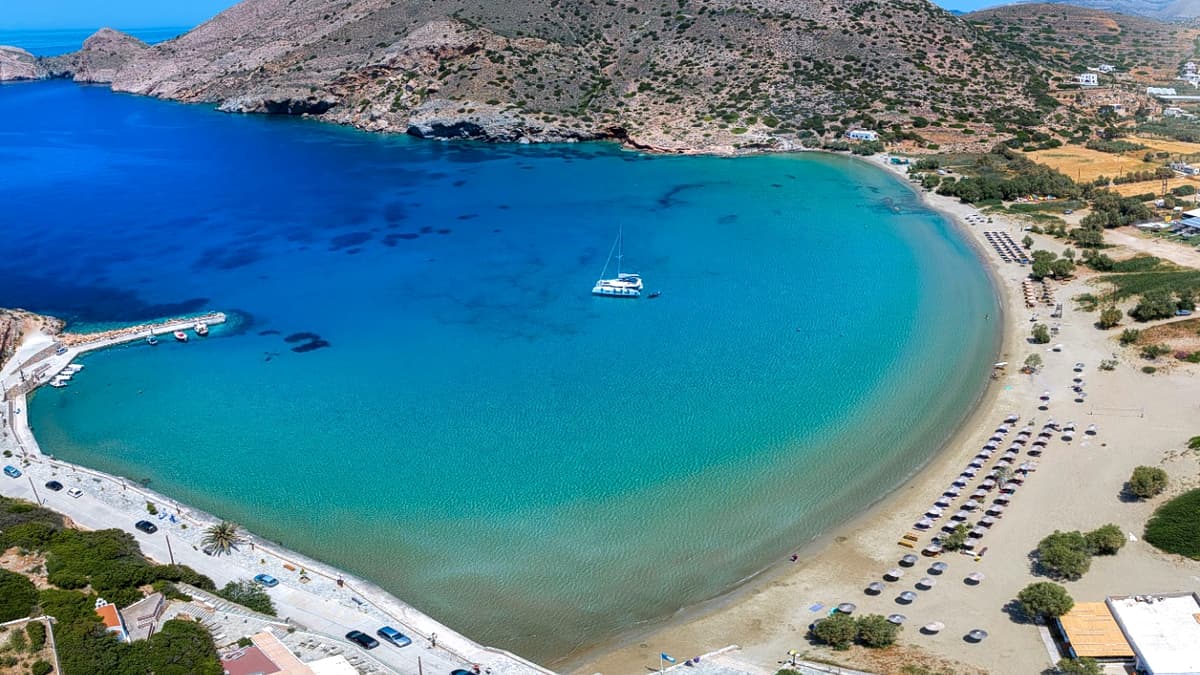
About the coast
Greek beaches divide cleanly by geography. The Ionian islands on the west — Corfu, Kefalonia, Zakynthos — get the cliff-and-cove drama and the bluest water in the country. The Aegean (Crete, the Cyclades, the Dodecanese) is windier, more open, and runs to long sand bays rather than tight pebble coves. The Peloponnese mainland holds a bit of both. Most of what's worth visiting is reachable on a 90-minute ferry from somewhere bigger.
Swimming is comfortable May through October. July and August are peak — domestic Greek holidays plus the international rush — and the meltemi wind picks up in the Aegean. June and September are our default windows: warm enough, far less crowded, and ferries still run on the summer timetable.
Regions covered
Beach reviews
5 reviewed in Greece.
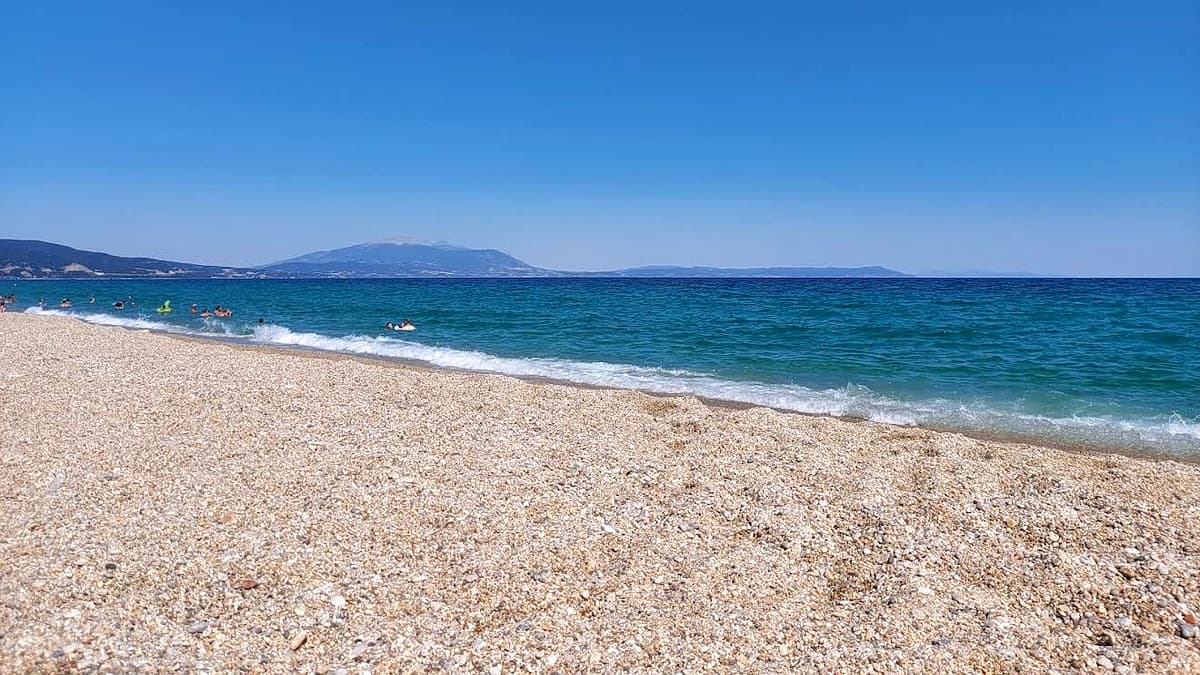
Central Macedonia
Nea Vrasna Beach
A long, shallow sand beach an hour east of Thessaloniki. The Greek-mainland answer to the family-bay brief: no foreign coach tours, lots of tavernas, water flat enough for the toddlers.
Syros
Galissas Beach
The beach on Syros that locals send you to when you ask. A semi-enclosed sandy bay on the west coast, tamarisk shade, a small village behind, and water that stays warm into October.
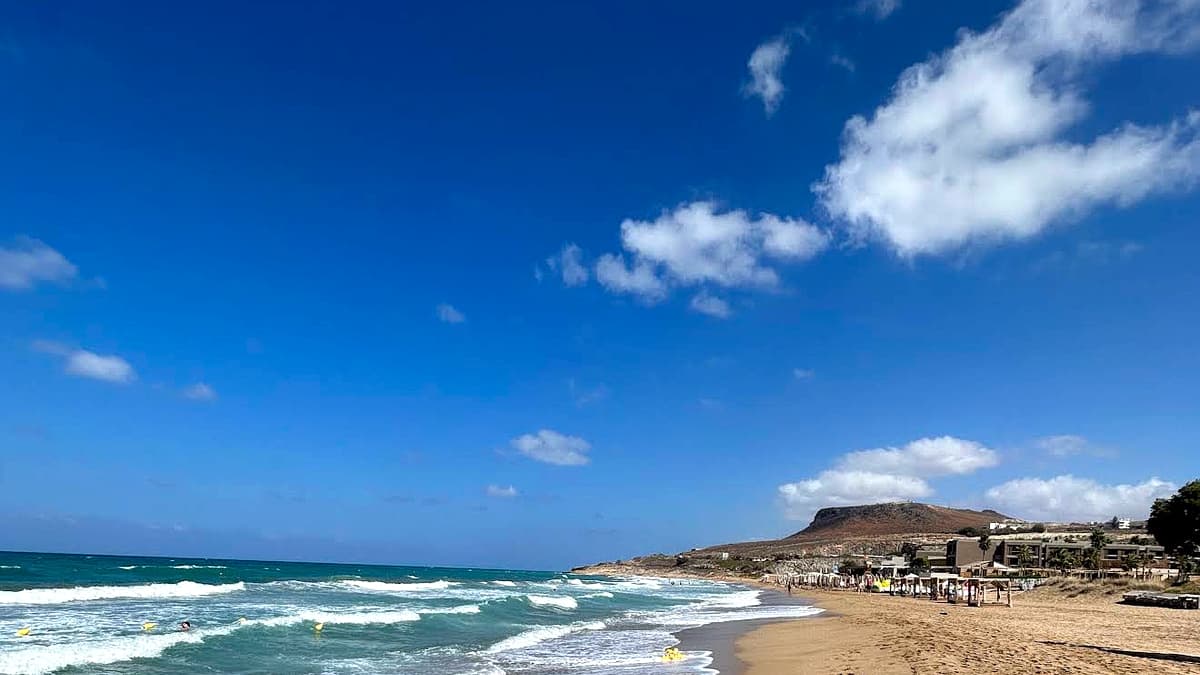
Crete
Amnissos Beach
Heraklion's nearest sandy bay, with Minoan ruins behind and the airport runway at one end.
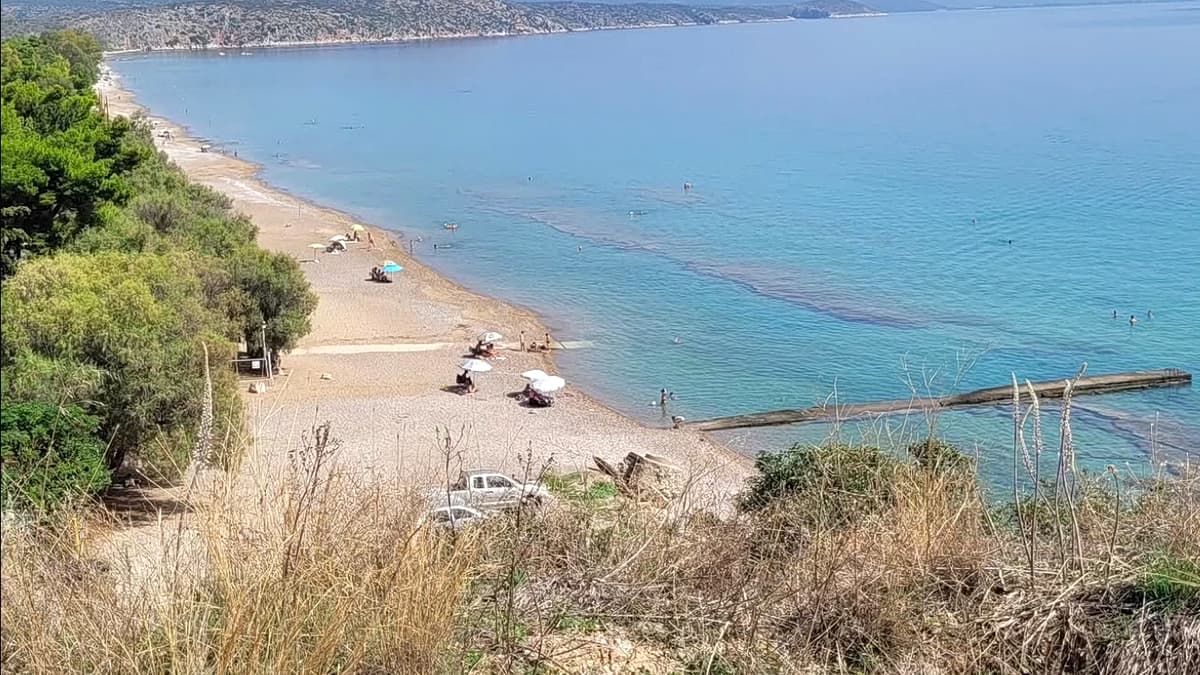
Peloponnese
Tolo Beach
The full-service holiday beach 15 minutes from Nafplio: long sand, shallow water, two small islands offshore.
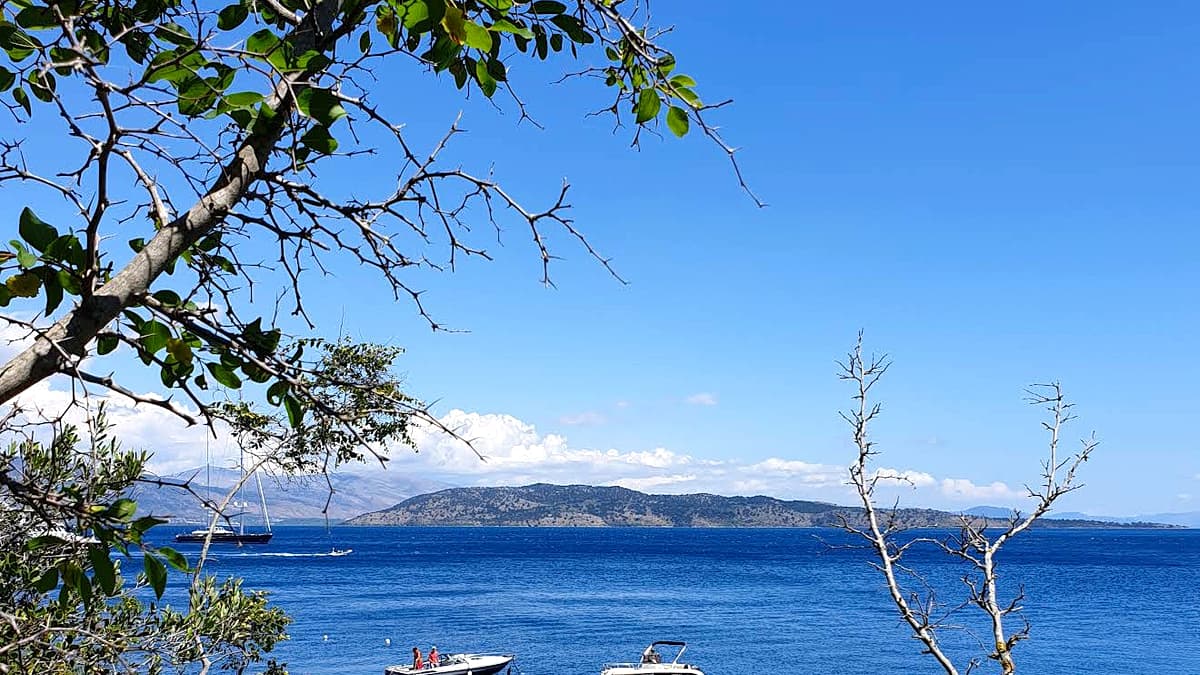
Corfu
Agni Beach
Three tavernas, a pebble cove, and the boat taxi from Kalami.