Galissas Beach
The beach on Syros that locals send you to when you ask. A semi-enclosed sandy bay on the west coast, tamarisk shade, a small village behind, and water that stays warm into October.
Gallery
Three more frames.
Click to expand
- TypeSandy semi-enclosed bay
- LengthAbout 400 m
- BestMay–early Oct (peak Jul–Aug)
- Access7 km west of Ermoupoli; 15 min by car, hourly KTEL bus in summer
- CrowdModerate (busy at peak, calm shoulder)
Contents · 5
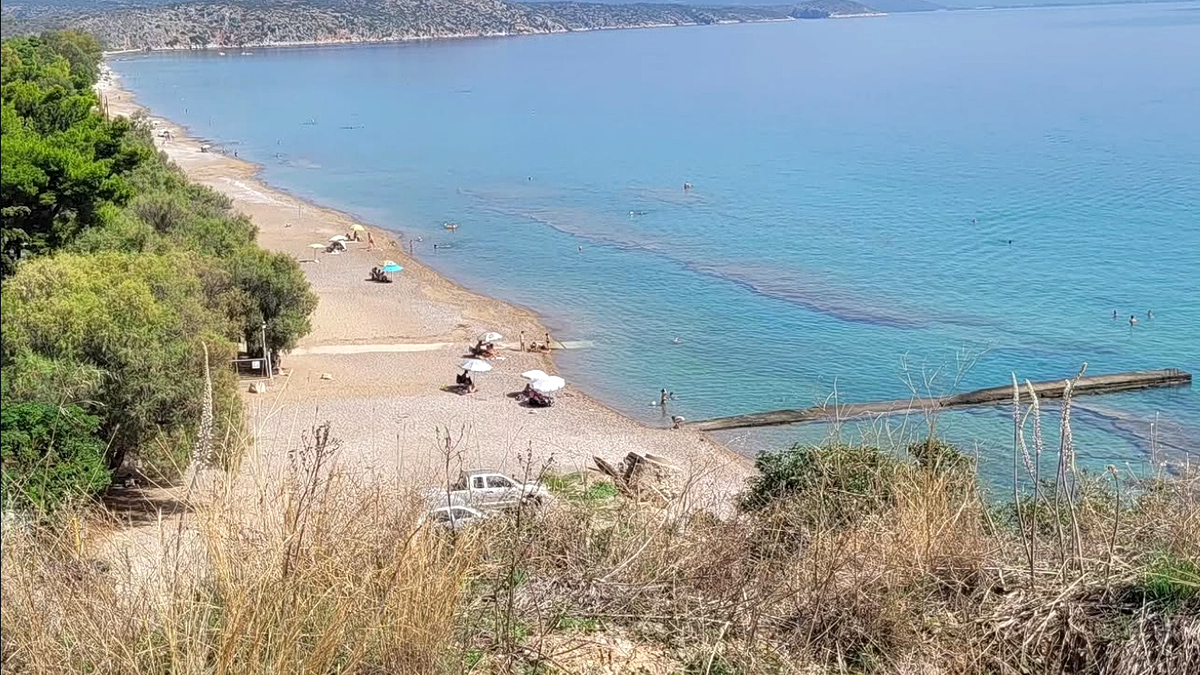
Galissas is the beach on Syros that locals send you to when you ask. Known in Greek as Γαλησσάς, it sits on the west coast of the island, a semi-enclosed sandy bay tucked between two low headlands with tamarisk trees along the back and a small working village behind. Syros doesn't try to compete with Mykonos for glamour or Santorini for the photo, and Galissas reflects that. The clientele is mostly Greek, the tavernas are family-run, and the water holds its warmth into October.
How to get to Galissas Beach
Syros is one of the easier Cyclades to reach from Athens. Blue Star ferries run from Piraeus in about three and a half hours, the high-speed Seajets in around two. The port is in Ermoupoli on the east side of the island. Galissas is on the opposite coast, about 7 km west, and the drive between them takes 15 minutes on the cross-island road.
By car or scooter from Ermoupoli, follow the signs west out of town towards Galissas and Kini. Parking in Galissas is free along the village street and in the lots behind the beach. By bus, the KTEL Syros line runs from Ermoupoli to Galissas roughly hourly in summer, less often in shoulder season. The fare is small and the trip takes 25 minutes including stops.
If you're island-hopping, Syros is a regional ferry hub: connections run to Mykonos in about an hour, Paros in two, and Tinos in 30 minutes. Galissas works well as a quiet base for day trips to the showier islands.
The beach itself
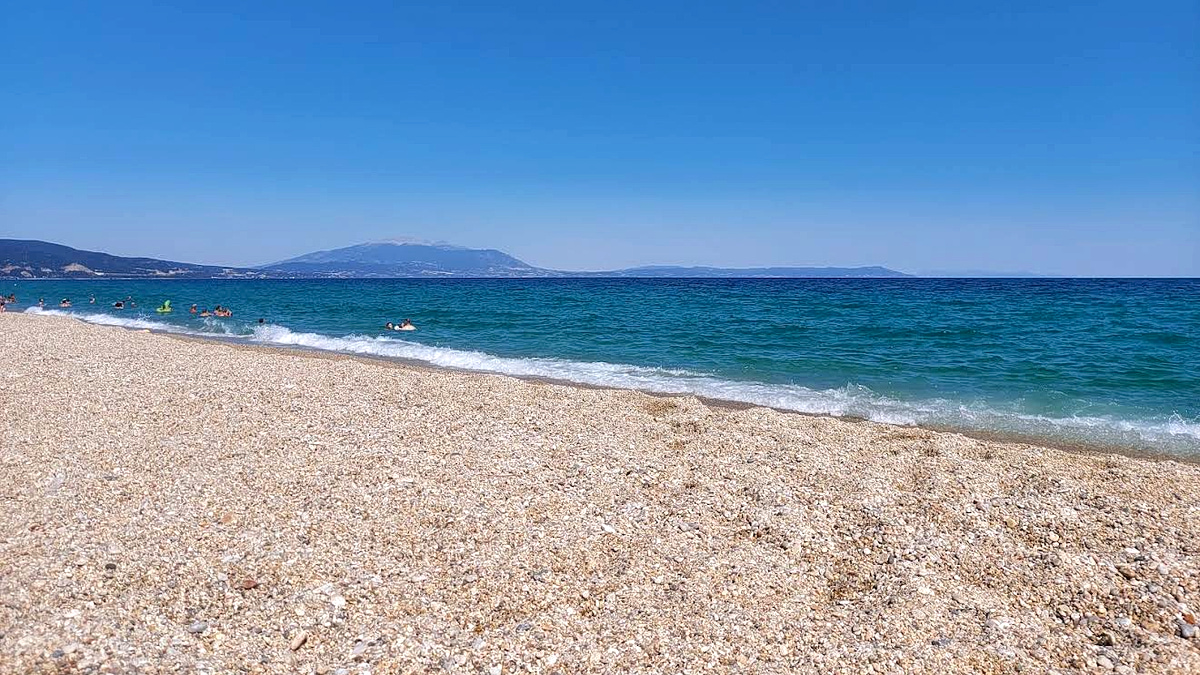
The bay is about 400 metres of sand with shingle and rocks at both ends. The sand is fine and pale, more like a north Aegean beach than the dark grain you get on the south Cyclades. The shape of the bay does the work: two rocky arms close around it so the water inside stays flat even when the open Aegean is rough.
The entry is gradual. You can wade out 20 metres before the depth reaches your chest, which is why families take this beach over the rockier alternatives further north on the same coast. The water is clear enough to see the seabed from standing depth on a calm morning. The temperature climbs through May and June into the low twenties, holds at 23 to 25°C from July through September, and drops back to swimmable in October.
Tamarisk trees grow in a continuous strip along the back of the beach. This is the part that makes Galissas different from most Cycladic bays. You can lie under a tree on a towel without paying for a sunbed, and the trees grow naturally rather than from someone's beach-bar landscaping. They also keep the back of the beach cool well into the afternoon. Sunbeds and umbrellas are available from a couple of operators at typical Cycladic prices.
Aghia Pakou and the headland
The small whitewashed chapel of Agia Pakou sits on the rocky headland at the north end of the bay. You can walk to it in about 10 minutes from the beach, following the path that climbs up from the village side. The chapel itself is locked outside service days but the headland is the photo spot for the bay: Galissas from above, the village behind, and the open Aegean to the west.
Sunset from this headland is the easy win on Syros. The light hits the village white and the water turns the deep blue you came for, and it's quiet enough that you're not jostling for a position on the rock.
The village and what to eat
Galissas village backs the beach in a narrow strip: one street running parallel to the sand with tavernas and small hotels, and a couple of side streets climbing up the hill behind. The cafes directly on the beach are fine for a frappé but the food is better one street back. Look for the tavernas with handwritten Greek-only menus and grilled-fish boards out front.
The standard order is fresh fish (priced by weight, ask before you commit), grilled octopus, and a Greek salad with the local tomatoes. House wine is fine. The Cycladic cheese to ask for is kopanisti, sharp and aged, served as a meze with capers. Most tavernas serve dinner from 8pm onwards, lunch from 1pm, and close in the gap.
The village has a mini-market for breakfast supplies and a bakery for the morning tyropita. There are no bars or clubs to speak of. The action is in Ermoupoli, 15 minutes away.
The verdict on Galissas Beach
Galissas is the bnsmag pick on Syros if you want a swim-and-stay base. The beach is genuinely good rather than just photogenic. The village is small and local rather than a tourist stage. The bay is calm enough for kids and clear enough for the snorkellers at the north end.
It's our pick for families with young children, anyone wanting the Cyclades without the Mykonos-Santorini price tier, and travellers who like to base on a quiet beach and day-trip to the islands' showier ones. Syros's location in the middle of the Cyclades makes Galissas an unusually good ferry base.
It's not our pick if you came for the white-cube hillside photo or for nightlife. Stay on Santorini or Mykonos respectively. It's also not our pick if you want long, open, wind-exposed sand, in which case Amnissos Beach near Heraklion on Crete is the bigger Aegean alternative.
For a Greek-mainland answer to the same family-bay brief, Tolo Beach in the Peloponnese is the equivalent on the east coast. For more of the Cycladic coast, see the Syros destination atlas as more reviews land.
What we loved
- +Semi-enclosed bay means calm water and gentle entry, family-friendly by default
- +Tamarisk trees along the back of the beach give natural shade, rare in the Cyclades
- +Real working village behind it with tavernas, a mini-market, and small hotels
- +15 minutes from Ermoupoli, the proper Cycladic capital with its mansions and shipyards
- +Syros draws far less foreign tourism than Mykonos or Santorini, so the crowd is mostly Greek
Worth knowing
- −Sand transitions to shingle and rocks near the waterline at both ends of the bay
- −Limited free shade outside the tamarisk strip, sunbeds fill quickly in August
- −No nightlife to speak of; if you want bars and clubs go to Ermoupoli or another island
- −Aghia Pakou chapel on the headland is the standard photo spot, expect company on the walk up
- −The bay catches the afternoon meltemi wind in July and August, swimming gets choppy
Editor's tips
- →Walk 10 minutes north to the Aghia Pakou chapel for the bay view, sunset is the best light
- →Eat in the village tavernas one street back, not the beachfront cafes (better food, half the price)
- →Pair Galissas with a half-day in Ermoupoli, the most architecturally serious of the Cycladic capitals
- →Visit in late May, June, September, or early October for warm water with two-thirds fewer people
- →Bring water shoes if you plan to swim out at the rocky north end where the snorkelling is best
Frequently asked questions about Galissas Beach
How do you get to Galissas Beach from Ermoupoli?
Is Galissas Beach sandy or pebble?
When is the best time to visit Galissas?
Is Syros worth visiting over Mykonos or Santorini?
Keep reading