Beach Reviews/Greece·Central Macedonia
Nea Vrasna Beach
A long, shallow sand beach an hour east of Thessaloniki. The Greek-mainland answer to the family-bay brief: no foreign coach tours, lots of tavernas, water flat enough for the toddlers.
Gallery
Three more frames.
Click to expand
- TypeLong sandy beach
- LengthAbout 3 km of continuous sand
- BestJun–Sep (peak Jul–Aug)
- Access75 km east of Thessaloniki on Egnatia Odos (A2), exit 23 (Asprovalta)
- CrowdBusy (peak), Moderate (shoulder)
Contents · 4
Nea Vrasna is what a Greek family beach looks like when foreign tourism hasn't taken it over. The local name is Νέα Βρασνά, the location is the Strymonian Gulf an hour east of Thessaloniki, and the brief is shallow water, long sand, dense tavernas, and a hundred apartment blocks worth of Greek summer holidays packed into a three-kilometre strip. It is not the photo you want for Instagram. It is the beach we'd take a family of seven to in July.
How to get to Nea Vrasna Beach
From Thessaloniki, take Egnatia Odos (the A2 motorway) east towards Kavala. The drive is 75 km and takes roughly an hour outside peak traffic, longer in August. Exit 23 is Asprovalta, the larger neighbouring town. Nea Vrasna is signposted 3 km further east along the coast road. You won't miss it.
By bus, KTEL Makedonia runs services from Thessaloniki's central terminal to Asprovalta several times a day in summer, the trip takes about 90 minutes including stops. From Asprovalta to Nea Vrasna it's a 5-minute taxi or a 30-minute walk along the seafront. Frequency drops off significantly in shoulder season.
Thessaloniki Airport (SKG) is 90 minutes' drive west. Most visitors to Nea Vrasna are driving from Thessaloniki, Serres, or further north (Bulgaria and Serbia are both within day-trip range of the beach, which is part of why the village's character is what it is).
The beach itself
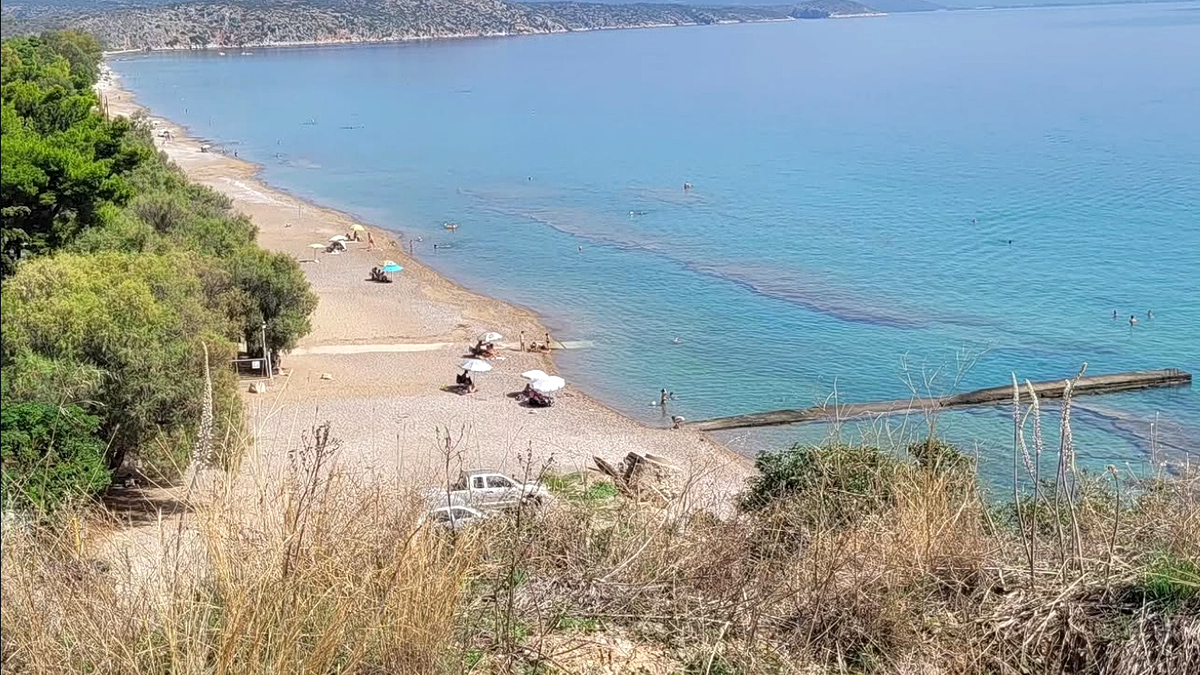
The beach is a continuous strip of pale sand running for about 3 km from Asprovalta in the west to the pine-covered headlands at the eastern end. The Strymonian Gulf is more sheltered than the open Aegean coasts of Halkidiki and Sithonia, which means the surface stays flat most days even when the wind is up further south.
The entry is the headline feature. You can wade out 30 to 40 metres before the depth reaches your chest, depending on the spot. This is why Nea Vrasna is the family beach of choice for northern Greece: kids walk before they swim, and parents can sit on a sunbed and see them from the back of the beach. The sand is fine and pale, with patches of compact sand or fine pebble near the waterline at some stretches.
Water clarity is good rather than great. The Strymonian Gulf carries some river-fed nutrient load from the Strymon estuary to the east, which means the water is healthier than it looks but rarely reaches the glass-clear of the Cyclades. Visibility in standing depth is around 2 to 3 metres on a calm morning. Temperature climbs into the mid twenties from late June and holds through September.
The village and what to eat
Nea Vrasna village backs the beach as a 2 km strip of apartment blocks, tavernas, mini-markets, and souvenir shops. It is not picturesque. The buildings are 70s and 80s reinforced concrete, painted in pale colours that have weathered to dust shades, and the architecture is unapologetically built for the summer-let market. Across most of Europe this would feel grim. In northern Greece it feels honest: nobody is pretending this is a Cycladic village, the prices reflect that, and the food can be very good in spite of the setting.
The tavernas to look for are one street back from the seafront. Grilled fish is priced by the kilo from the catch board, ask for the day's recommendation. Order the gavros marinatos (marinated anchovies) as a cold meze and a Greek salad with the local tomatoes (Macedonian tomatoes are some of the best in the country). House wine is fine; the local tsipouro with mezedes is the real evening order.
Asprovalta, 3 km west, is the larger neighbour with more hotel choice and a slightly less apartment-block feel. Stavros, 20 minutes east, is the older fishing village with a proper harbour and the best tavernas of the three. Nea Vrasna sits in the middle and is the cheapest of the three to base in.
The verdict on Nea Vrasna Beach
Nea Vrasna is a particular kind of bnsmag pick: the practical, unfancy, family-default option on a stretch of coast that has fancier alternatives if you want them. The beach itself is genuinely good, the logistics are easier than anywhere else within an hour of Thessaloniki, and the village's lack of pretension is a feature rather than a bug.
It's our pick for families with young children, anyone driving in from Thessaloniki for a short break, and travellers who want the Greek summer culture rather than the Greek-island photo. It's also the right call for a road-trip base if you're combining beach days with day trips to Kavala, Mount Athos viewpoints (the peninsula itself requires a male-only permit), or the Strymon estuary wetlands.
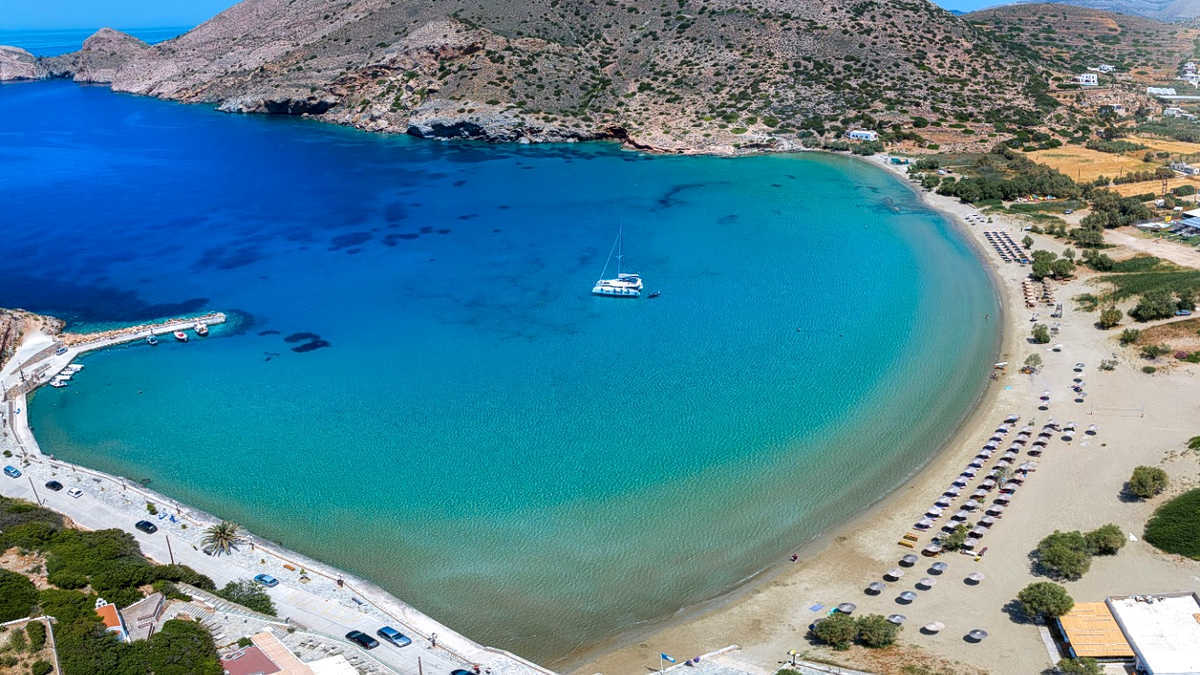
It's not our pick if you came for the photogenic-village experience. The architecture isn't there. For that, drive an extra hour to Sithonia or Kassandra in Halkidiki. It's also not our pick if you want crystal-clear Aegean water; the Cycladic islands deliver that and Nea Vrasna doesn't try to compete. The Cycladic answer to the family-bay brief is Galissas Beach on Syros, which has the calmer, clearer alternative if you can take the ferry.
For a different shallow-bay base on the Greek mainland, Tolo Beach in the Peloponnese is the southern equivalent. For more of the Macedonian coast as it lands on bnsmag, see the Greece country atlas.
What we loved
- +Three kilometres of continuous shallow sandy beach, no walking to find a spot
- +Densely served by tavernas, beach bars, mini-markets and apartment blocks, all logistics handled
- +One-hour drive from Thessaloniki on the highway, easy day trip or short break
- +Strymonian Gulf water is calmer than the open Aegean coasts of Halkidiki or Sithonia
- +Real Greek-domestic-tourism beach, you see the actual summer culture rather than a foreign-tourist version
Worth knowing
- −August is the Greek national holiday month, the village fills to apartment-block capacity
- −Apartment-block back-of-beach rather than picturesque village, not the Instagram photo
- −Hotel options are limited, most accommodation is short-let summer apartments
- −Halkidiki to the south has more photogenic beaches if you have the extra driving time
- −Several stretches transition to fine pebble or compact sand near the waterline
Editor's tips
- →Visit in June or September for the same warmth and a third of the August crowd
- →Drive 20 minutes east to Stavros for older village tavernas and the harbour walk
- →Nea Vrasna works as a road-trip base for Kavala, Mount Athos viewpoints, or the Strymon estuary
- →The shallows extend a long way out, ideal for non-swimming kids and pregnant mothers
- →Take Egnatia Odos (A2) all the way; avoid the coastal road via Stavros in peak summer traffic
Frequently asked questions about Nea Vrasna Beach
How do you get to Nea Vrasna Beach from Thessaloniki?
Is Nea Vrasna Beach sandy or pebble?
When is the best time to visit Nea Vrasna?
Is Nea Vrasna or Halkidiki better for a family holiday?
Keep reading