Beach Reviews/Greece·Peloponnese
Tolo Beach
The full-service holiday beach 15 minutes from Nafplio: long sand, shallow water, two small islands offshore.
Gallery
Three more frames.
Click to expand
- TypeSandy bay
- Length~1.1 km
- BestMay–Oct (avoid Jul/Aug crowds)
- Access15-min drive from Nafplio + KTEL bus, ample parking off-peak
- CrowdBusy
Contents · 5
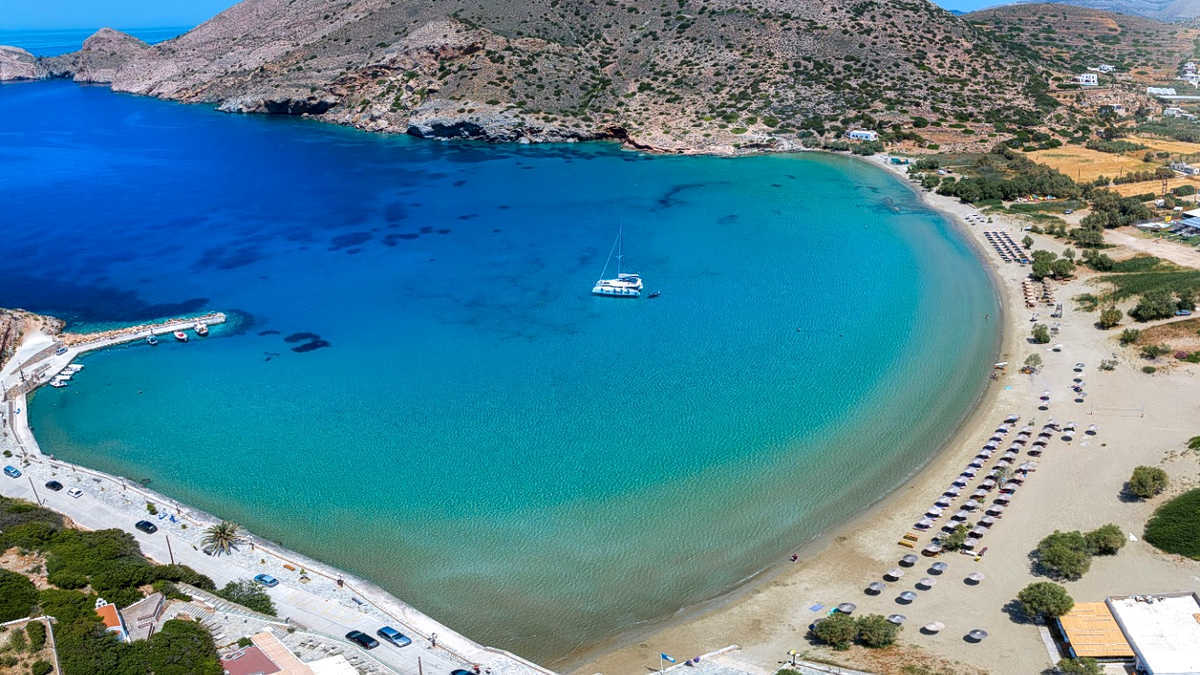
Tolo Beach in Nafplio is what an unfussy Greek family holiday beach looks like. Long, sandy, shallow, and busy. Twelve kilometres from Nafplio, fifteen minutes by car, signposted from every roundabout. There are sunbeds, beach bars, sandwich vans, and two small islands sitting just offshore so the kids have something to swim toward. You won't find a hidden-cove angle here. That isn't what this beach is. What this beach is, is easy. And easy has its uses.
How to get to Tolo Beach
By car, you're driving 12 km southeast of Nafplio toward Epidaurus, then turning right at the first roundabout following signs for Tolo. The whole trip takes about fifteen minutes on well-maintained roads. There's no winding descent and no parking lottery in shoulder season. In July and August it's a different story: parking near the beachfront fills by 10am and you'll be circling.
By bus, KTEL Argolida runs regular services from Nafplio's main bus station to Tolo throughout the day. The trip is about twenty-five minutes and lands you a short walk from the sand. Buses run more frequently in summer and reduce off-season.
By taxi or rideshare, it's a short ride from Nafplio, useful if you're staying for dinner. Expect about €15 to €20 each way in season.
If you're coming from Athens, factor a 2.5-hour drive (about 145 km via the Korinthos-Tripoli highway) and plan to overnight in Nafplio rather than turning around the same day.
The beach itself: sand, shade, shallow water
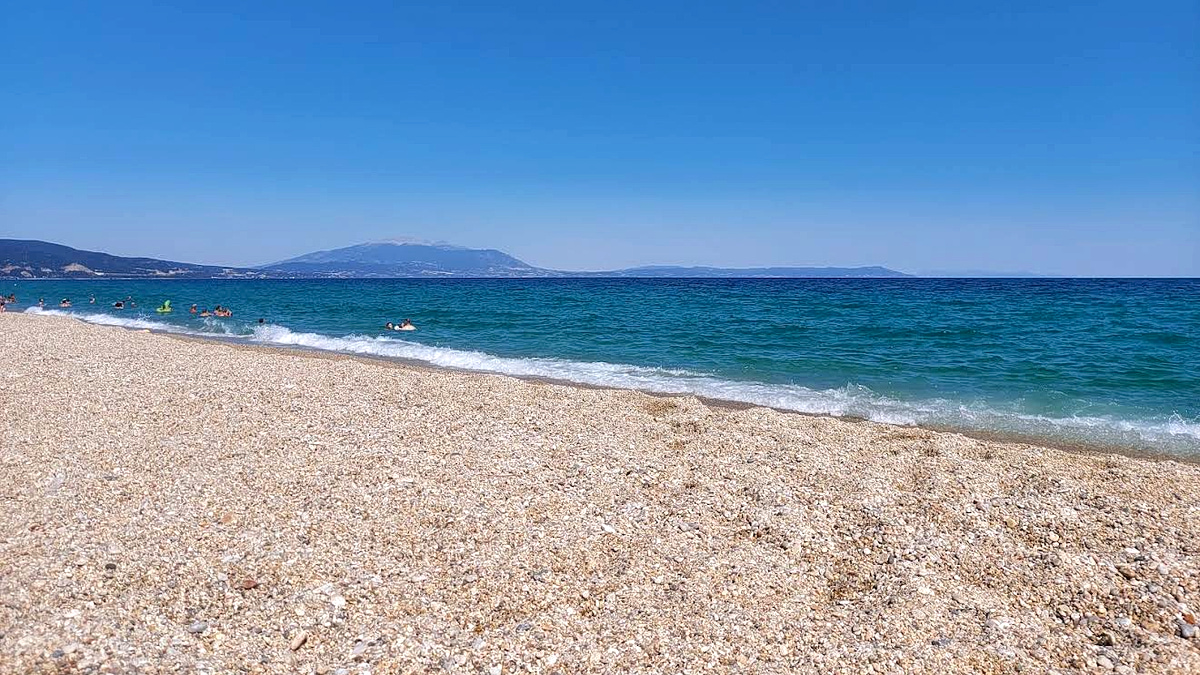
The full Greek name is "Psili Ammos", which means fine sand, and the name does the work. The beach is a soft sandy crescent more than a kilometre long, curving gently from the village strip at the north end to a quieter rocky outcrop at the south. The sand is pale gold and slightly powdery underfoot, not the coarse mixed-shingle sand you sometimes find in the Argolic Gulf.
A row of mature tamarisk trees lines the back of the beach, providing genuine shade if you set up early or you walk a few metres back from the sunbed strip. Free shade in summer Greece is rare. Plan for it.
The water is what makes Tolo a default family beach. The slope is so gradual that you can walk twenty or thirty metres out and still be only chest-deep. Toddlers play in ankle-deep water for an hour while parents read at the waterline. Visibility is good but not Ionian-blue: think clear pale blue on a calm day, slightly more green when there's wind. The gulf is sheltered by the small offshore islands and rarely gets choppy.
Swimming is unrestricted along the entire beach. There is no lifeguard, so the usual rules apply. Don't go alone, mind the buoys that mark the swim-zone boundary, and watch for jellyfish in late August when they sometimes drift in.
The two islands offshore: Romvi and Daskalio
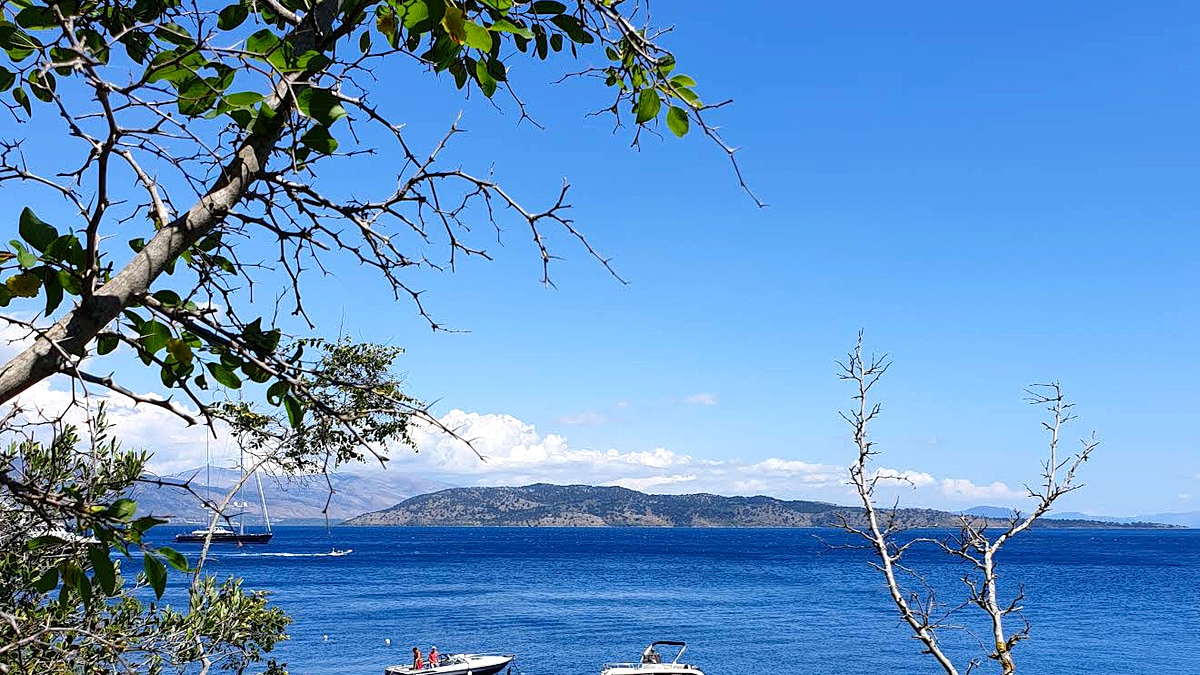
The two small islands sitting in the bay are the thing that makes Tolo's view distinctive. The larger one is Romvi, just over 250 metres from shore at the closest point. The smaller, Daskalio, is set further back. Strong swimmers do swim out to Romvi in calm conditions, and it's a common test of confidence among local teenagers, but the gulf has currents in places and we wouldn't recommend it without a snorkel buddy or a kayak as backup.
The easier and more interesting approach is to rent a small boat or a pedalo from one of the operators along the village strip. Hourly rates run around €15 to €25 depending on the craft. You can land at a small jetty on Romvi and walk up to the remains of a medieval castle wall on the high ground. Daskalio, the smaller island, was once used as a school house and now sits quiet except for the occasional kayaker.
A daily passenger boat from the port of Tolo also runs longer trips in summer to Hydra, Spetses, and Monemvasia. These are useful if you want a day-trip island-hop without driving to a bigger port.
Snorkelling is best around the rocky south end of the beach and near the lee side of Romvi. The reefs are modest but you'll find small fish, sea urchins, and the occasional octopus.
Sunbeds, tavernas, and when to go
The front two rows of the beach are sunbed-and-umbrella territory, run by the beach bars and tavernas behind. Rates in 2026 sit at roughly €10 to €15 per set per day, sometimes free if you eat lunch at the operator. There's plenty of free space further back near the tamarisk line and at either end of the beach, where you can spread a towel without spending anything.
The village strip immediately behind the sand has the full holiday-beach line-up: cafés for the morning frappe, casual fish tavernas for lunch, beach bars for the afternoon, gelato shops, a couple of mini-markets for water and snacks. Nothing is more than a five-minute walk from your sunbed. Prices are normal Greek tourist prices, neither cheap nor outrageous.
Water sports are clustered toward the centre of the beach: pedalos, kayaks, windsurfs, jet skis, banana boats. If you're travelling with teenagers you won't be short of activity options.
When to go matters more here than at most beaches because Tolo's character shifts with the season. Late May to mid-June is the sweet spot. The water has warmed up, families with school-age kids haven't arrived yet, sunbed competition is light. September is the second sweet spot for the same reasons. July and August are peak everything: crowded, lively, sometimes too lively if you wanted a quiet read. Avoid Sundays in summer when locals from across the Argolida descend for the day.
The verdict on Tolo Beach
Treat Tolo as a hidden gem and you'll be disappointed. It isn't one and was never trying to be. Treat it as a well-run, easy, family-friendly resort beach 15 minutes from one of the prettiest old towns in Greece, and you've got one of the most practical beach days the Peloponnese offers.
It's our pick for travelling with kids, with grandparents, with anyone who wants a beach that does most of the thinking for you. It's not our pick if you came for solitude, drama, or the kind of cove where the only sound is your own breath. There are quieter beaches on this stretch of the Argolic Gulf if that's what you want. Plaka, Karathona, Kondili. Tolo is the social one. If you came to Greece for the opposite end of the spectrum (a small pebble cove with three seaside tavernas where the swim is a side dish to lunch), look at Agni Beach in Corfu.
So: come for a long, comfortable, swim-and-eat afternoon, especially if it's tucked into a Nafplio town day. Come back if you have kids in the water. Skip it if you came to Greece for empty coastlines. For more of the Peloponnese coastline, see the destination atlas.
What we loved
- +Long sandy crescent (over 1 km) with shallow, gradual water
- +Family-friendly: kids can wade 20+ metres out and still be chest-deep
- +Excellent facilities: sunbeds, beach bars, showers, water sports
- +Two small islands offshore (Romvi and Daskalio) for boat trips and snorkelling
- +Easy 15-minute drive from Nafplio, with frequent KTEL bus service
Worth knowing
- −Very crowded in July and August
- −Parking fills by 10am in peak season near the beachfront
- −Lively resort atmosphere, not a place for solitude
- −Front rows of sunbeds dominate; free space sits further back
- −Sunday locals descend en masse in summer
Editor's tips
- →Visit in May, June, September, or early October for sand without the crush
- →Arrive before 10am in peak season to find both parking and a sunbed
- →Walk to the south end for quieter water and fewer crowds
- →Rent a small boat or pedalo (€15 to €25 an hour) to reach Romvi island
- →Pair it with a Nafplio town day: castle, Old Town, beach, dinner
Frequently asked questions about Tolo Beach
How do you get to Tolo Beach from Nafplio?
Is Tolo Beach good for families?
Can you swim to the islands off Tolo Beach?
When is the best time to visit Tolo Beach?
Keep reading