Loukkos Tou Mandi Beach
A small cliff-jump cove 100 metres from the Ayia Napa harbour, with crystal-clear water and a ladder pier for entry.
Gallery
Three more frames.
Click to expand
- TypeRocky cove with sand and pebble patches
- Length~150 m
- BestApr–Oct (lifeguard + swim season)
- Access5–10 min walk from central Ayia Napa; closest parking at the harbour
- CrowdBusy
Contents · 5
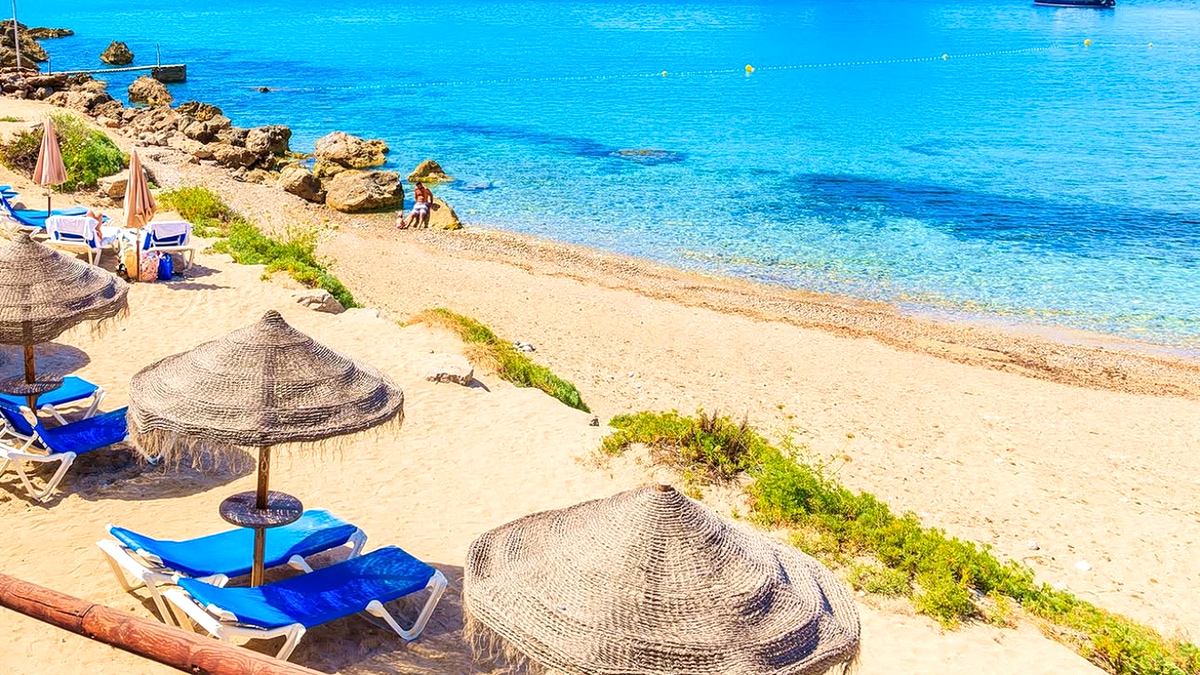
Loukkos Tou Mandi sits 100 metres west of the Ayia Napa harbour, and it is the cove you can swim from without leaving central Ayia Napa. The beach itself is small, about 150 metres of mixed fine sand and rounded pebbles. The water is the clear south-Cyprus turquoise that the tourist board photographs are not lying about. There's a ladder pier to drop into deep water without crossing the rocky shallows. There's a rocky outcrop above it that the local teenagers use as a five-metre cliff jump. Come for the swim, not the sand.
How to get to Loukkos Tou Mandi Beach
By foot from central Ayia Napa, Loukkos Tou Mandi is a 5 to 10 minute walk. From the central square or the Ayia Napa Monastery, head south down to the harbour, then west along the seafront path. The beach is signposted. The walk along the harbour and past the fishing boats is part of the appeal.
By car, the closest paid parking is at Ayia Napa Harbour itself. From there it's the same short walk down to the cove. Driving directly to the beach is not realistic because of the pedestrian zones. Parking fills in July and August by mid-morning, but it cycles fast as visitors come and go.
By bus, the OSEA local service from Ayia Napa to Cape Greco passes the harbour stop. From there it's a five minute walk. The bus is cheap and runs every 30 to 60 minutes in summer.
If you're staying in central Ayia Napa, you don't need transport at all. The cove is genuinely walking distance, and the path along the harbour is one of the more pleasant town walks you'll do.
The beach itself: sand, pebbles, the ladder pier
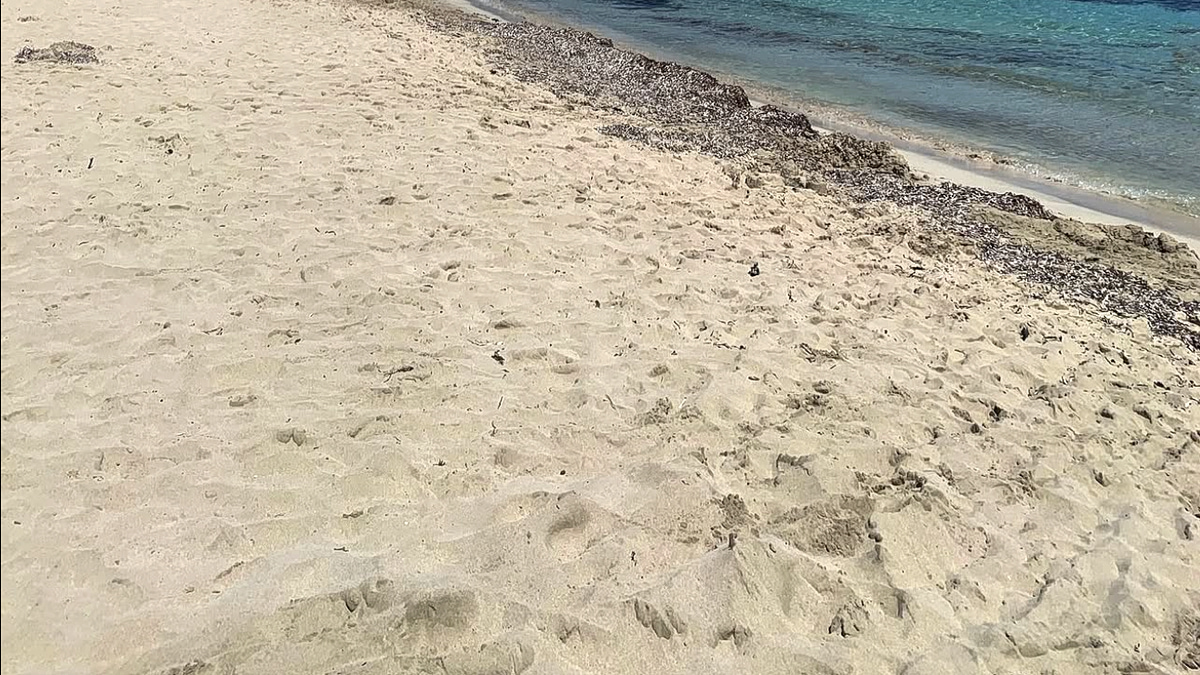
The beach is small. About 150 metres of curving shoreline between two low rocky outcrops, with a mix of fine golden sand and rounded pebbles underfoot. The sand patches are concentrated toward the centre of the cove. The pebble sections are at either end, near the rocks. If you want soft sand, plant your towel in the middle.
The water clarity is the headline. Loukkos Tou Mandi is sheltered by the headland and the harbour breakwater, so the water tends toward the glassy end of the south-Cyprus blue spectrum. On calm mornings you can see your feet at chest depth and beyond that the seabed is clearly visible. Visibility makes the cove popular with snorkellers, who congregate around the rocks at the east end.
Entry into the water from the sand is easy but the shallow zone is rocky in places. The local council installed a specially equipped pier with a steel ladder for swimmers who prefer to drop directly into deeper water without crossing the rocky shallows. The ladder is on the west side of the beach and is genuinely useful, especially for older swimmers or anyone wary of underwater rocks.
Lifeguard supervision runs from April to October. There's a small lifeguard station mid-beach, plus first-aid equipment. The swim-zone buoys are tight to the cove. Stay inside them; small boats and pedalos from the harbour pass close to the eastern headland.
The cliff jump and the rocky outcrop
The rocky outcrop above the western end of the cove is the feature that gives Loukkos Tou Mandi its identity. It is roughly five metres tall above the water at the standard jumping platform, and the water beneath is deep, sheltered, and consistently clear enough to check for rocks before you jump. Local teenagers do it all summer. Visitors do it in their own time.
It is not a regulated activity. There is no licensed operator, no formal queue, no signoff. Whether you jump is on you. If you're going to, the basic rules apply: check the water depth and the wind direction before each jump (the wind can drift you sideways onto rocks), jump out away from the cliff face, and don't dive head-first unless you know exactly where the bottom is. Most people jump feet-first.
For a calmer alternative, there's a lower ledge about two metres above the water that families with older children use. The drop is short, the splash is fun, and the rocks below are well clear of the landing zone.
If you don't jump at all, the outcrop is still the cove's photograph. Watching teenagers fly off it against the open sea is a small daily spectacle. The local code is: clear the landing area before stepping forward, and don't take pictures of the people jumping without asking first. Common courtesy.
What's around: harbour, walking path, other beaches
Loukkos Tou Mandi sits in the most walkable corner of Ayia Napa, and using it as a base for a small day is easy.
The Ayia Napa harbour, 100 metres east, is full of fishing boats, glass-bottom boat operators, and a small fleet of party-boat day trips. The two short pedestrian piers are good for a slow look at the boats and the catch coming in around 4pm. Several tavernas open onto the harbour itself: the food is mid-range tourist Greek-Cypriot, the views are excellent, and the sunset over the water is worth a glass of wine.
A pedestrian path runs west from the harbour past Loukkos Tou Mandi and continues to Vathia Gonia Beach about 15 minutes further on. Vathia Gonia is a longer sandy bay if you decide you want something less rocky. The path is paved, exposed in summer sun, and has occasional benches.
Central Ayia Napa town is 10 minutes uphill from the harbour: shops, ATMs, supermarkets, a couple of decent gelato places, and the Ayia Napa Monastery in the central square. The famous Nissi Beach and the larger sandy bays are 10 to 15 minutes away by car or local bus.
A convenience store and a couple of cafés sit directly on the path between the harbour and the cove. You don't need to plan more than five minutes ahead for food or water.
The verdict on Loukkos Tou Mandi
Treat Loukkos Tou Mandi as a destination beach and you'll be disappointed. It's small, the substrate is mixed, and the harbour traffic is constant. Treat it as a 90-minute swim-and-jump in the middle of an Ayia Napa day, walking distance from your hotel, with crystal-clear water and a built-in cliff for the brave, and the value is obvious.
It's our pick for a central Ayia Napa stay where you want a swim without renting a car. It's also our pick for travellers who want clear water in a sheltered cove and don't mind some rocks underfoot. Bring water shoes if you have them.
It's not our pick if you came to Cyprus for empty sandy bays. For that, drive 25 minutes to the south coast or further west to the Akamas peninsula. For a contrast with what Loukkos Tou Mandi isn't, the long curved sand of Tolo Beach in Nafplio is the family-bay version of the same kind of swim, and Agni Beach in Corfu is the small-cove version with lunch built in. For more of the Cyprus coastline, see the destination atlas.
What we loved
- +Crystal-clear water in a sheltered cove
- +Ladder pier into deep water bypasses the rocky shallows
- +Walking distance from central Ayia Napa and the harbour
- +Cliff-jumping outcrop for the brave (with a lower ledge for first-timers)
- +Lifeguard April to October, sunbeds, water sports, restaurants nearby
Worth knowing
- −Small beach: 150 metres total, fills fast in summer
- −Mixed sand and pebbles, with rocky underwater zones
- −No parking directly at the beach; harbour parking fills early
- −Boat traffic from the harbour passes close to the headland
- −Limited natural shade
Editor's tips
- →Pack water shoes for the rocky shallows
- →Use the ladder pier on the west side for the easiest deep-water entry
- →Arrive in the morning to beat the harbour day-trip boat crowd
- →Walk 15 minutes west along the pedestrian path to Vathia Gonia if you want sand instead
- →Save sunset for one of the harbour tavernas; the view across the boats is the easy win
Frequently asked questions about Loukkos Tou Mandi Beach
How do you get to Loukkos Tou Mandi Beach in Ayia Napa?
Can you cliff jump at Loukkos Tou Mandi?
Is the water at Loukkos Tou Mandi clear enough for snorkelling?
Is Loukkos Tou Mandi sandy or rocky?
Keep reading