Camp de Mar Beach
A sheltered sandy cove in southwest Mallorca with a rocky islet 50 metres offshore, reached by a wooden footbridge, with a fourth-generation family restaurant on top of it.
Gallery
Three more frames.
Click to expand
- TypeSheltered sandy cove with offshore islet
- LengthAbout 180 m
- BestMay–Jun & Sep–Oct (peak Jul–Aug)
- Access25–30 min drive from Palma; TIB 102 bus stops in the resort
- CrowdBusy with hotel guests in peak, easy in shoulder
Contents · 5
Every beach needs one thing you remember it by. At es Camp de Mar, in the southwest corner of Mallorca, it is the islet: a lump of rock fifty metres off the sand, joined to the beach by a long wooden footbridge, with a restaurant on top that the same family has run for four generations. We walked the bridge before our towels had even hit the sand, because everyone does, and ordered the paella, because you should.
How to get to Camp de Mar
Camp de Mar sits in the municipality of Andratx, about 25 km west of Palma. By car it is a 25 to 30 minute run on the Ma-1 motorway; come off at the Camp de Mar exit and drop down through the golf resort to the bay. Parking is a small lot behind the beach plus street spaces along the approach roads, and on July and August weekends both are gone by mid-morning. Arrive before 10:30 or plan to circle.
By bus, the TIB 102 coastal line from Palma's Estació Intermodal stops in Camp de Mar on its way to Port d'Andratx, taking about 50 minutes; check before boarding, because some express runs on the route skip the resort stops. From Peguera, the next resort east, it is one stop or a 40-minute clifftop walk. Palma airport is around 35 minutes by car.
The beach itself
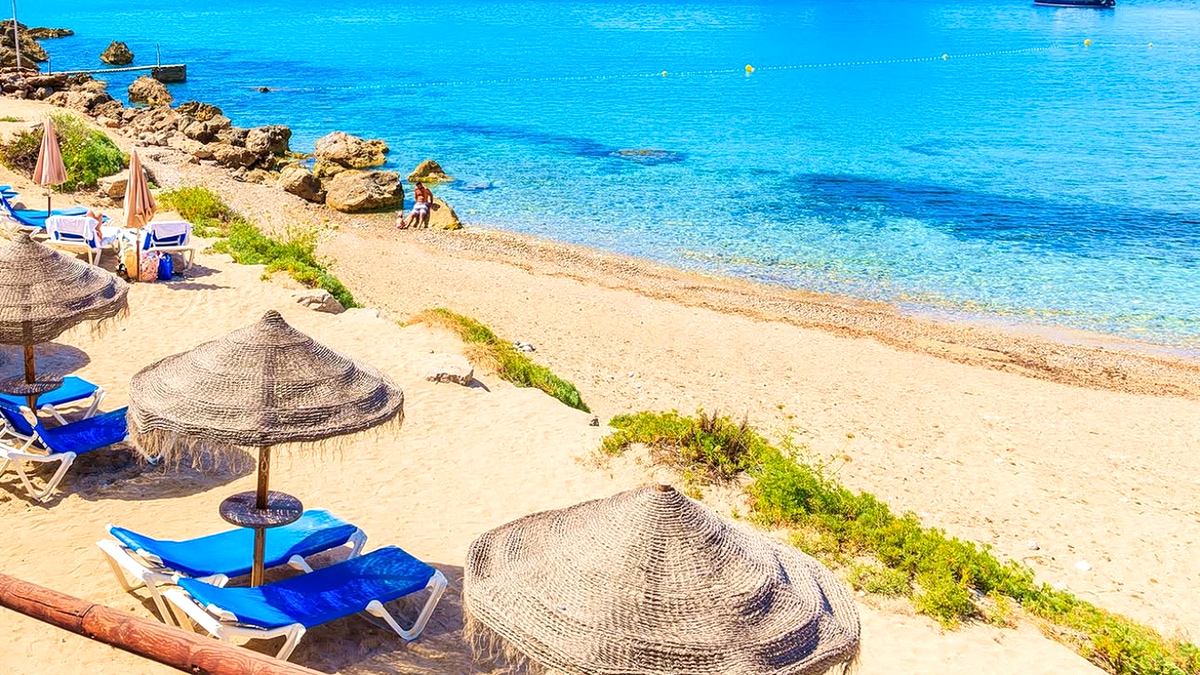
The cove is about 180 metres of pale sand, up to 50 metres deep, facing southwest between two pine headlands. The shelter is the point: on a normal summer day the bay is close to flat, the entry is sand almost the whole way, and the water over the shallows is the clear pale blue that the Balearics produce when posidonia meadows keep the seabed clean. The sea hits 21–22°C in June, peaks at 26–27°C in August, and stays swimmable to mid-October.
Facilities are full resort grade: sunbed and umbrella ranks, showers, a summer lifeguard, pedalos, and a couple of beach bars where the sand meets the road. The crowd is mostly guests from the hotels around the bay, families and golfers, with a strong German and British presence. It is comfortable rather than fashionable, and after a day there we mean that as a compliment.
One honest note: the backdrop is built. Hotel blocks, apartments and the Golf de Andratx course ring the cove. If you want wild Mallorca, this is not it, and the island has wilder corners we cover elsewhere.
The islet and the restaurant
The footbridge has connected the islet to the beach since the 1930s, and the restaurant on it has been in the same family for four generations. Tables sit around the rock's rim with water on every side; the kitchen does Mallorcan seafood, with the paella and the whole grilled fish as the standing orders. It is not cheap and it does not need to be, because the location does half the work and the cooking honestly does the other half. Book ahead for summer lunches and any sunset slot. Film scouts agree, incidentally: the islet has turned up in The Night Manager and White Lines among others.
Even if you skip the meal, walk the bridge. The view back at the cove from the islet, with the Tramuntana foothills stacking up behind, is the best free thing in Camp de Mar.
What is nearby
Camp de Mar works as a base because of what sits either side of it. Ten minutes west over the hill is Port d'Andratx, one of the prettiest harbours in the Balearics, with a long quay of fish restaurants that fill at sunset. Five minutes east is Peguera, with its longer Tora and Palmira beaches and a proper resort high street. Walkers can pick up the coastal path towards Cala Fornells from the Peguera end. And the Tramuntana mountains, Mallorca's serious landscape, start twenty minutes north.
The verdict on Camp de Mar
Camp de Mar is our pick for an easy, sheltered family swim in Mallorca's southwest, and the islet lunch lifts it from pleasant to memorable. The water is calm and clear, the logistics are simple, and the one-of-a-kind feature actually delivers.
It is not our pick for travellers chasing the raw Mallorca of walk-in coves and empty sand; the built backdrop is the price of the convenience. For that other Mallorca, our ranked guide to the best beaches in Mallorca covers the full range from Es Trenc's dunes to Caló des Moro's chaos. And if your Balearic plans stretch beyond this island, Cala d'Hort on Ibiza is our pick for the archipelago's single best view: a beach built around the rock of Es Vedrà the way this one is built around its islet, scaled up four hundred metres.
What we loved
- +The islet and its footbridge give the cove a feature no other Mallorcan beach has
- +Sheltered southwest-facing bay with calm, clear water and a gentle sandy entry
- +Full resort facilities: sunbeds, showers, summer lifeguard, beach bars behind the sand
- +Easy access from Palma by car or the TIB 102 coastal bus
- +Good base geometry: Peguera's beaches and Port d'Andratx's harbour restaurants are both under 10 minutes away
Worth knowing
- −Hotel blocks and a golf resort frame the bay; this is a built cove, not a wild one
- −Small beach that fills with hotel guests by late morning in July and August
- −Parking is a small lot plus street spaces, gone early on summer weekends
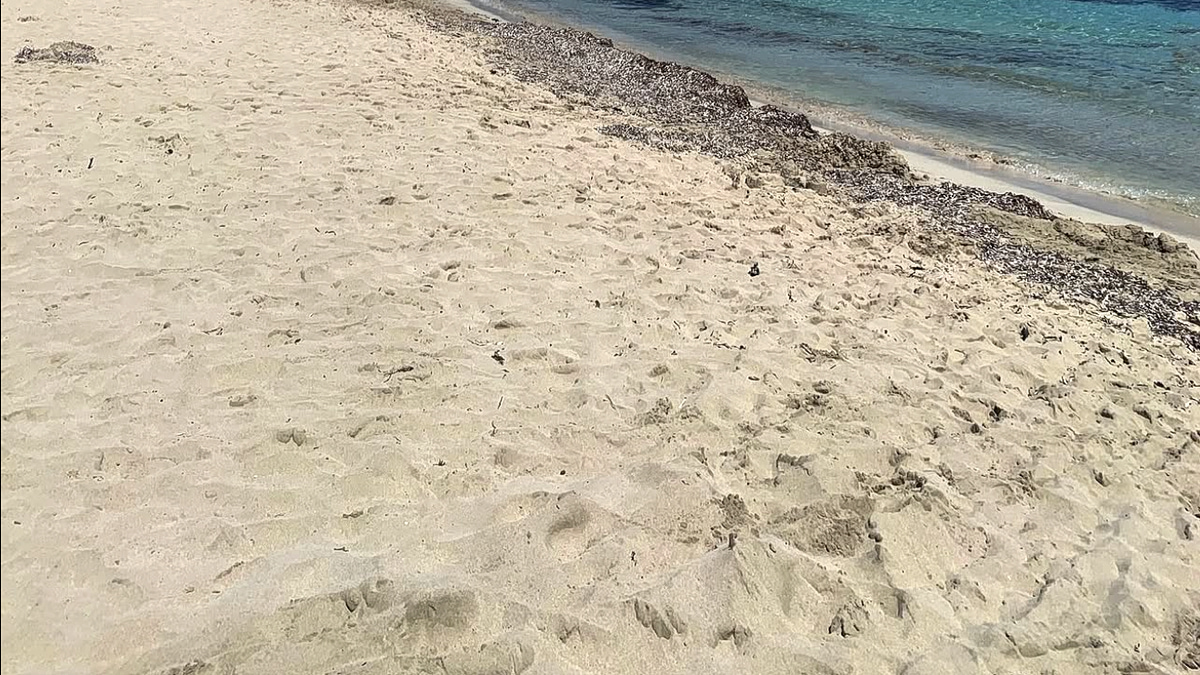
- −Occasional posidonia seagrass banks on the sand in spring, left in place by design
- −The islet restaurant books out in season, and a footbridge queue forms for photos at sunset
Editor's tips
- →Book the islet restaurant ahead in summer and ask for a rail-side table; paella and the day's fish are the orders
- →Walk the footbridge early morning before the beach fills; you get the cove to yourself and the light
- →Take the TIB 102 from Palma and check it is a stopping service; some express runs skip Camp de Mar
- →Pair the beach with an evening in Port d'Andratx, 10 minutes over the hill, for the harbour at sunset
- →In shoulder season bring snorkel gear; the rocks around the islet hold the most fish in the bay
Frequently asked questions about Camp de Mar Beach
How do you get to Camp de Mar from Palma?
Do you need to book the restaurant on the islet?
Is Camp de Mar good for families?
Is Camp de Mar better than Peguera?
When is the best time to visit Camp de Mar?
Keep reading