Cala d'Hort
The beach with the best view in the Balearics. A small sand-and-pebble cove in southwest Ibiza staring straight at the 382-metre rock of Es Vedrà, with paella on the cliff and a sunset that needs no filter.
Gallery
Three more frames.
Click to expand
- TypeSand and pebble cove facing Es Vedrà
- LengthAbout 160 m
- BestMay–Jun & Sep–Oct (peak Jul–Aug)
- Access30–35 min drive from Ibiza Town; parking in flux in 2026, arrive early
- CrowdRammed by late morning in peak, calm in shoulder
Contents · 6
There are bigger beaches on Ibiza, softer ones, easier ones. There is no view like this one. Cala d'Hort, the orchard cove in Catalan, named for the cultivated valley behind it, is a 160-metre notch of sand and pebbles in the island's southwest corner that happens to face Es Vedrà: a bare limestone rock rising 382 metres straight out of the sea, two kilometres offshore. We have watched a beach full of people simply stop talking when the sun started dropping beside it.
Es Vedrà, briefly and honestly
The rock is a nature reserve, protected since 2002 along with its small sibling Es Vedranell, and you cannot land on it. The mythology attached to it is its own industry: claims that it is one of the most magnetic points on earth (it is limestone, and it is not), links to the sirens of the Odyssey, the goddess Tanit, and the visions reported by the Carmelite priest Francesc Palau, who retreated there in the 1850s. Believe whatever improves your evening. What is true without any help is that a 382-metre sea rock lit orange at sunset is one of the great sights of the Mediterranean.
How to get to Cala d'Hort
The cove is in the municipality of Sant Josep de sa Talaia, about 30 to 35 minutes' drive from Ibiza Town and roughly the same from San Antonio. The final approach is a narrow lane with switchbacks down the hillside and slow, polite negotiation in summer.
Now the honest part, because it matters in 2026: parking here is in flux. The cove's only car park, an unpaved lot run on private land, closed in May 2026 after a licensing standoff between the owner and the town hall, and a smaller nearby lot had already been shut for safety reasons. The municipality says it is working on a solution, and these stand-offs tend to resolve, but until it does you should not assume a midday space exists. Arrive before 10am, take a taxi, or come in shoulder season when the pressure drops. There is no useful bus; public transport gets you to the wider Es Cubells area at best, still a long hot walk away.
The beach itself
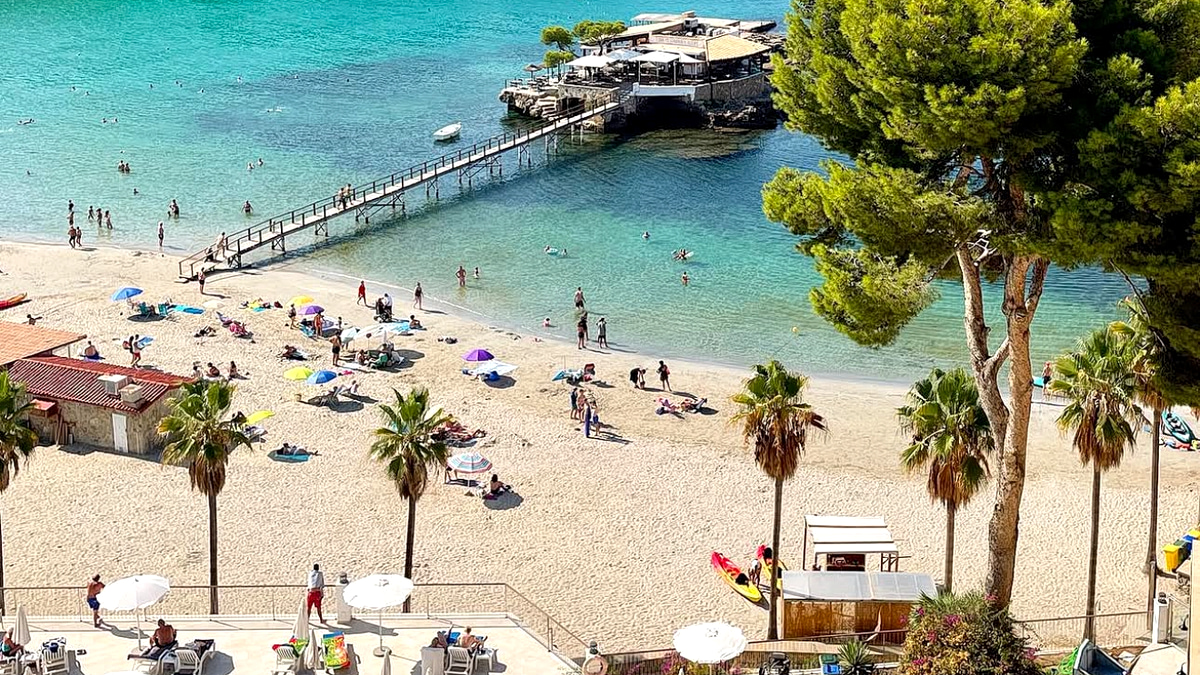
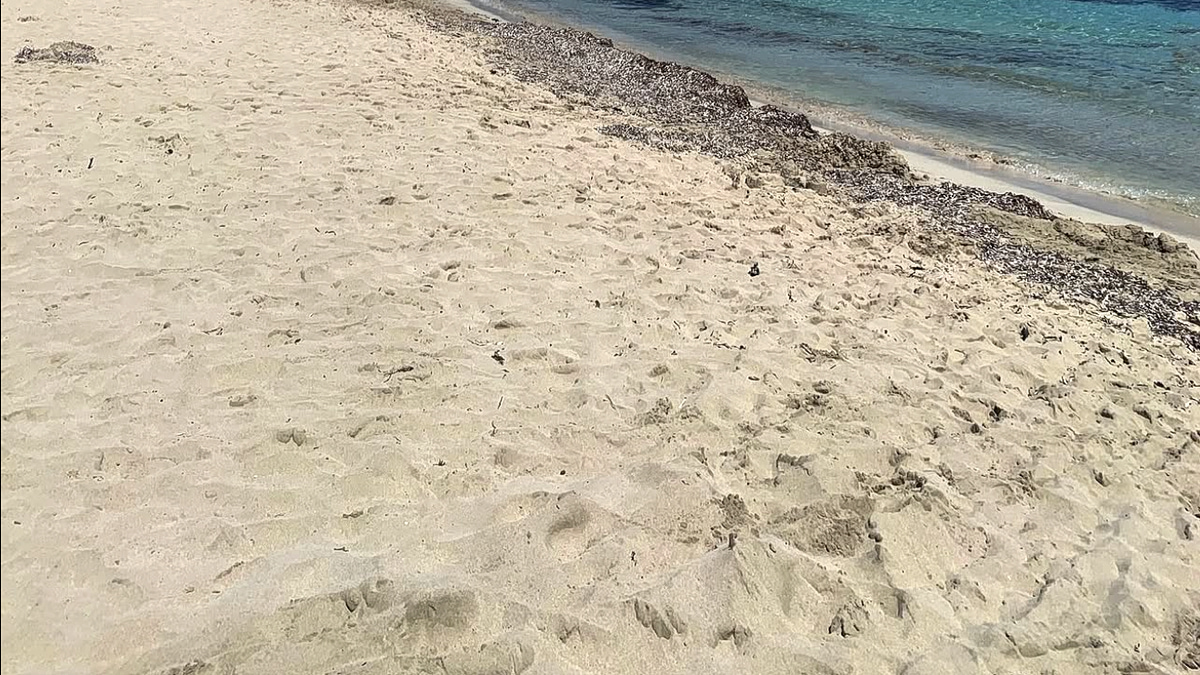
The cove is small and slightly scruffy in the way that keeps a place honest: pale sand through the middle, pebbles and rock shelves towards the edges, fishermen's boat huts tucked into the south end. The water is classic west-Ibiza, clear over a sandy channel that makes for easy swimming straight out towards the rock. Snorkelling is best along the north edge below the cliff. The bay faces west, so calm mornings are the rule and westerly swell the occasional exception, arriving fast and putting genuine waves on the shore.
Sunbeds are rented in the centre of the cove in season; facilities beyond that are basic, which is part of why the place still feels like Ibiza before the marketing. The sea passes 21°C in June, peaks around 26°C in August, and holds to 23°C in early October.
Eating: the cliff house and the beach house
Two restaurants serve the cove and both have been at it for decades. Es Boldadó sits on the cliff at the north end, reached by its own track off the access road or by a scramble and staircase from the beach; it does the full Ibizan seafood repertoire, paella, fish stews, the day's catch, in front of the best dining-room view on the island. El Carmen sits on the beach itself and feeds the sunbed crowd well. In summer, book either; for a sunset table at the cliff house, book a week out and confirm.
The tower walk
Above the southern headland stands the Torre des Savinar, an eighteenth-century watchtower also known as the pirate tower, and the climb to it from the pull-offs on the access road takes 20 to 30 minutes. From the tower the cove, the cliffs and Es Vedrà arrange themselves into the exact view every Ibiza photo book uses. Go late afternoon, carry water, and add the ruins of the Phoenician settlement at Sa Caleta, ten minutes east and part of Ibiza's UNESCO listing, if you want the full history loop.
The verdict on Cala d'Hort
Cala d'Hort is our pick for the best sunset beach in the Balearics, and it is not close. The cove itself is a 3.5: small, mixed underfoot, capacity-limited. The setting is a 5 that bends every other number upward. Add a serious cliff restaurant and the tower walk and you have one of those rare beaches that justifies a whole afternoon of logistics.
It is our pick for couples, photographers, and anyone on Ibiza who wants proof the island is more than its clubs. It is not our pick for families wanting soft sand and easy parking, especially while the 2026 parking dispute drags on, and the all-day sunbed crowd is better served elsewhere. If your trip spans the archipelago, our ranked guide to the best beaches in Mallorca covers the big island's contenders, and Camp de Mar over there offers this cove's exact opposite: total convenience, gentler beauty.
What we loved
- +The head-on view of Es Vedrà, a 382-metre limestone rock two kilometres offshore, is the single best beach view in the Balearics
- +West-facing, so the sun sets into the sea beside the rock; the best free show on Ibiza
- +Two long-standing restaurants, including the cliff-perched seafood house at the north end
- +Clear water with a sandy centre channel for easy swimming and rocky edges for snorkelling
- +The Torre des Savinar watchtower walk above the beach turns a swim into a half-day
Worth knowing
- −Access is the weak point: the only car park closed in May 2026 in a standoff between its private owner and the municipality, so check the current situation before driving out
- −The lane down is narrow with awkward summer passing
- −Small cove that hits capacity by late morning in July and August
- −Sand is mixed with pebbles and rock shelves; not the island's softest lie
- −Exposed to westerly swell, which can put waves on the shore with little warning
Editor's tips
- →Go for the last two hours of the day in shoulder season: sunset beside Es Vedrà with a quarter of the midday crowd
- →Book the cliff restaurant for a sunset table a week ahead in summer; the paella and the view do not need each other's help but you want both
- →Until the parking question is settled, arrive before 10am, come by taxi, or visit off-season; do not count on a space at midday
- →Walk the 20 to 30 minutes up to the Torre des Savinar viewpoint for the postcard angle down onto the cove and the rock
- →Bring snorkel gear for the rocky north edge, and water shoes if your feet are soft
Frequently asked questions about Cala d'Hort
Why is Cala d'Hort so famous?
Can you visit Es Vedrà itself?
What is the parking situation at Cala d'Hort?
Is Cala d'Hort good for swimming?
When should you go for the sunset?
Keep reading